Last updated November 21, 2026
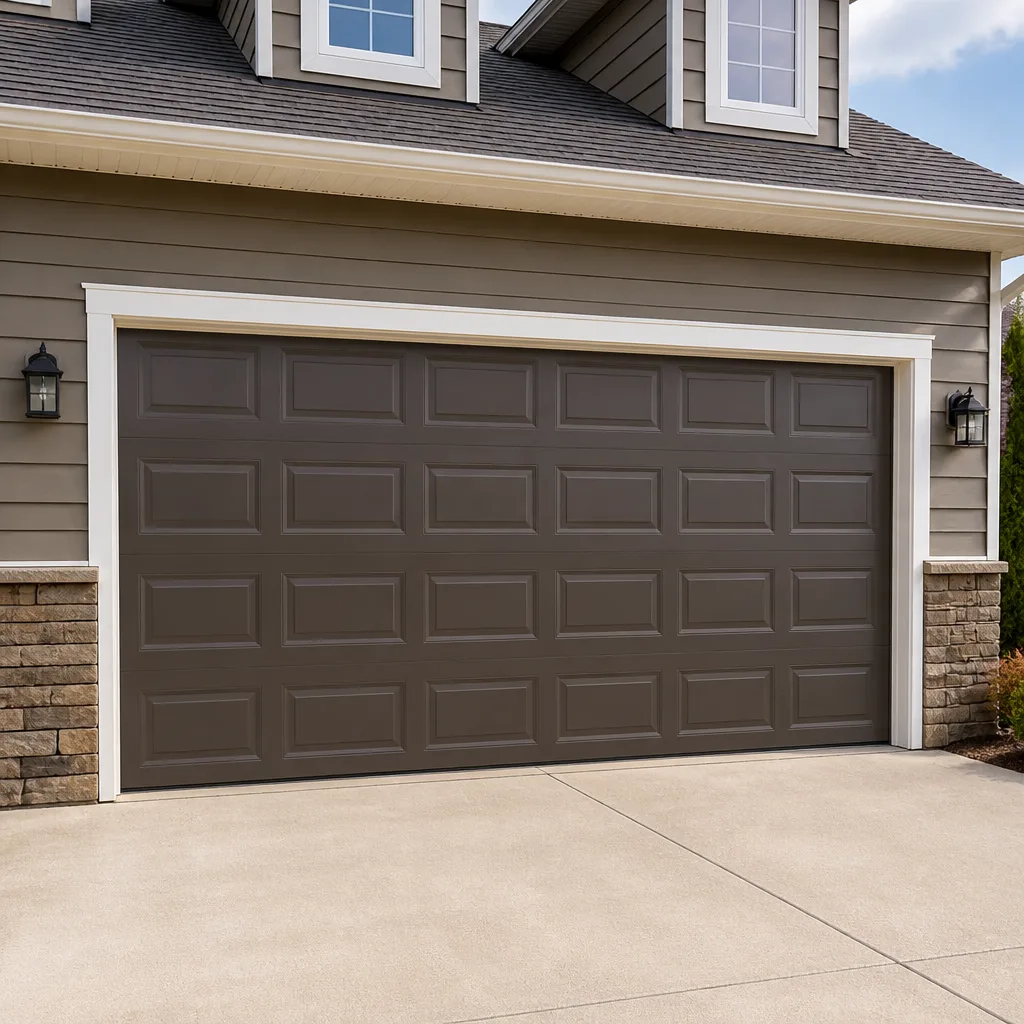 Raised-panel steel
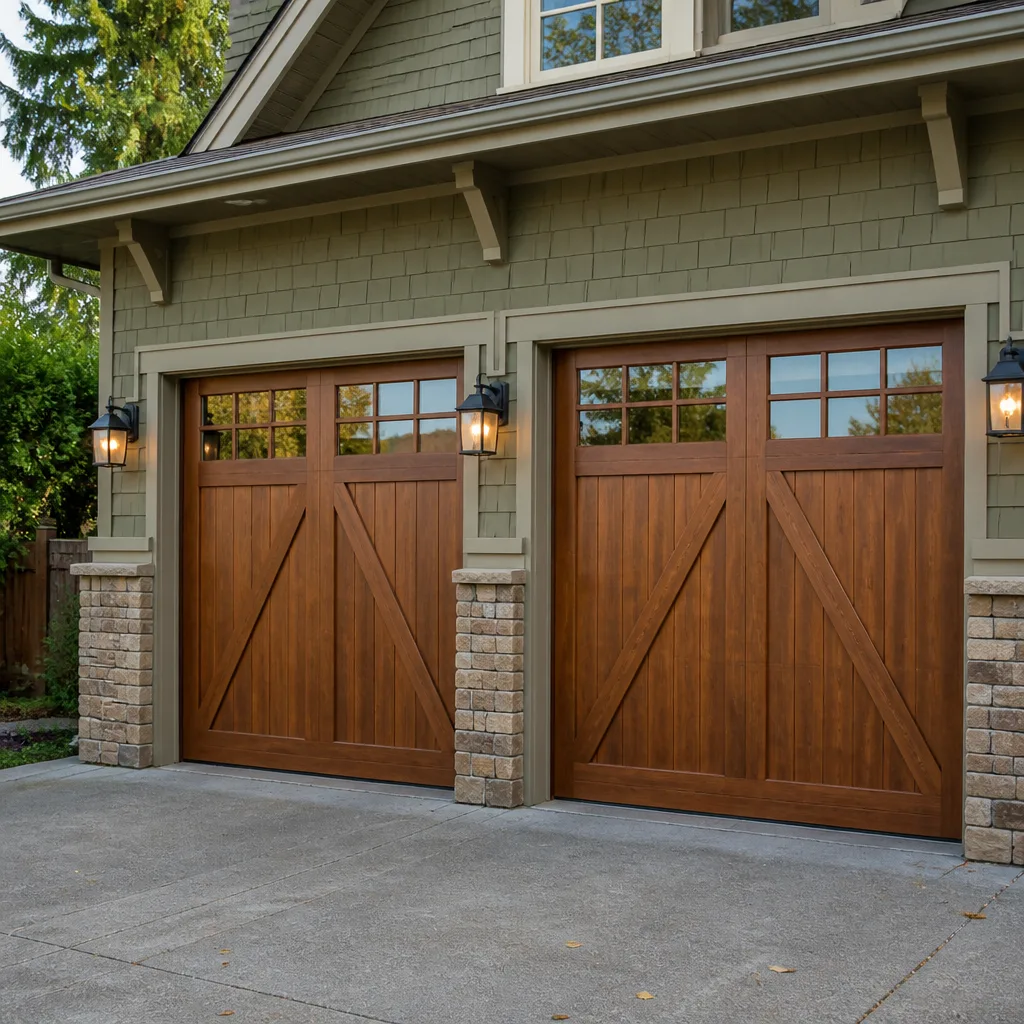 Carriage house
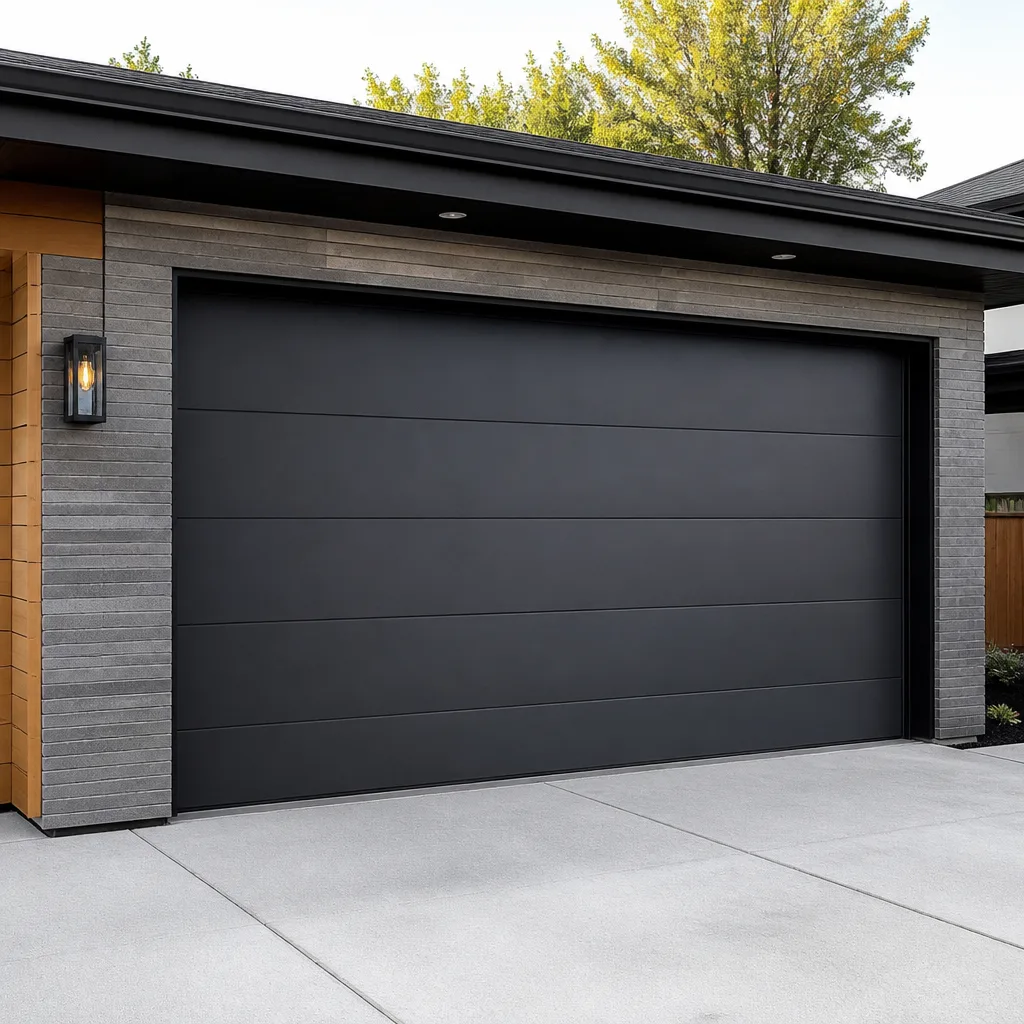 Modern flush
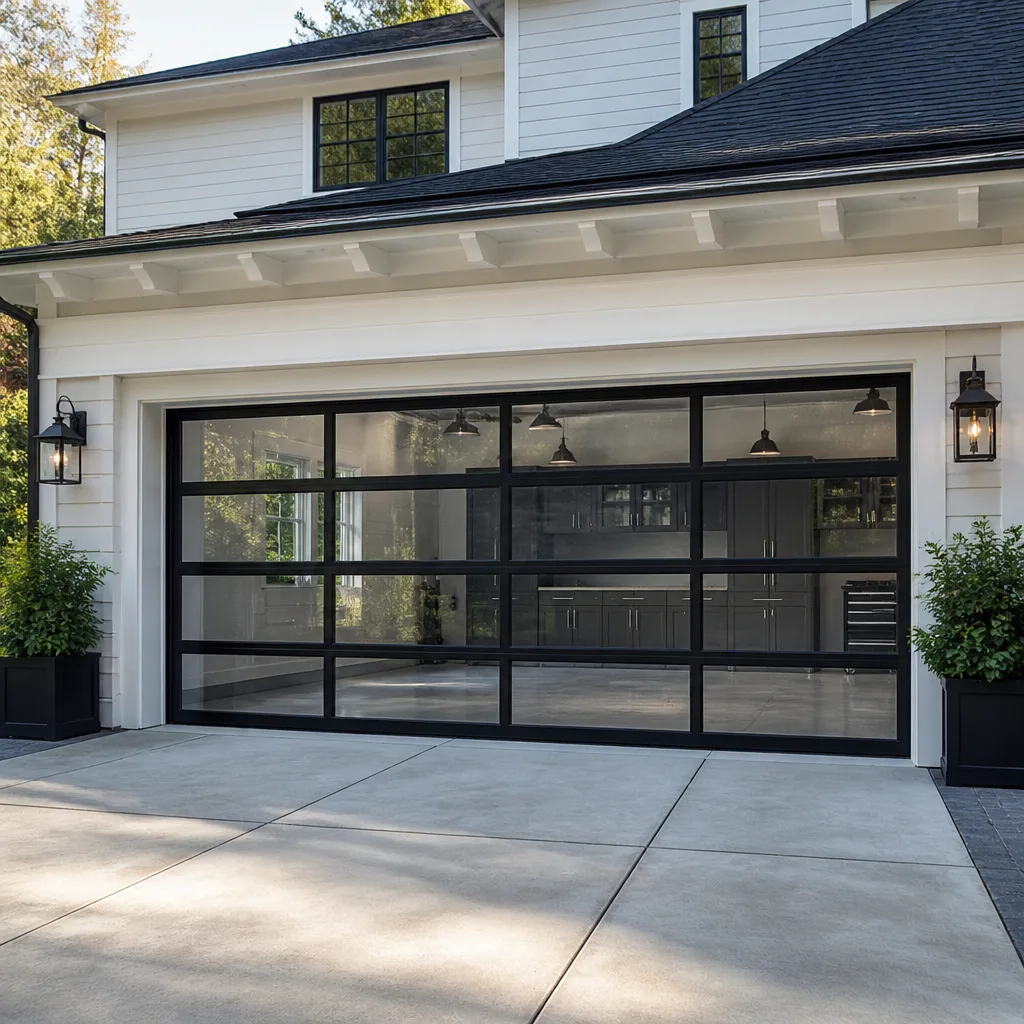 Full-view glass
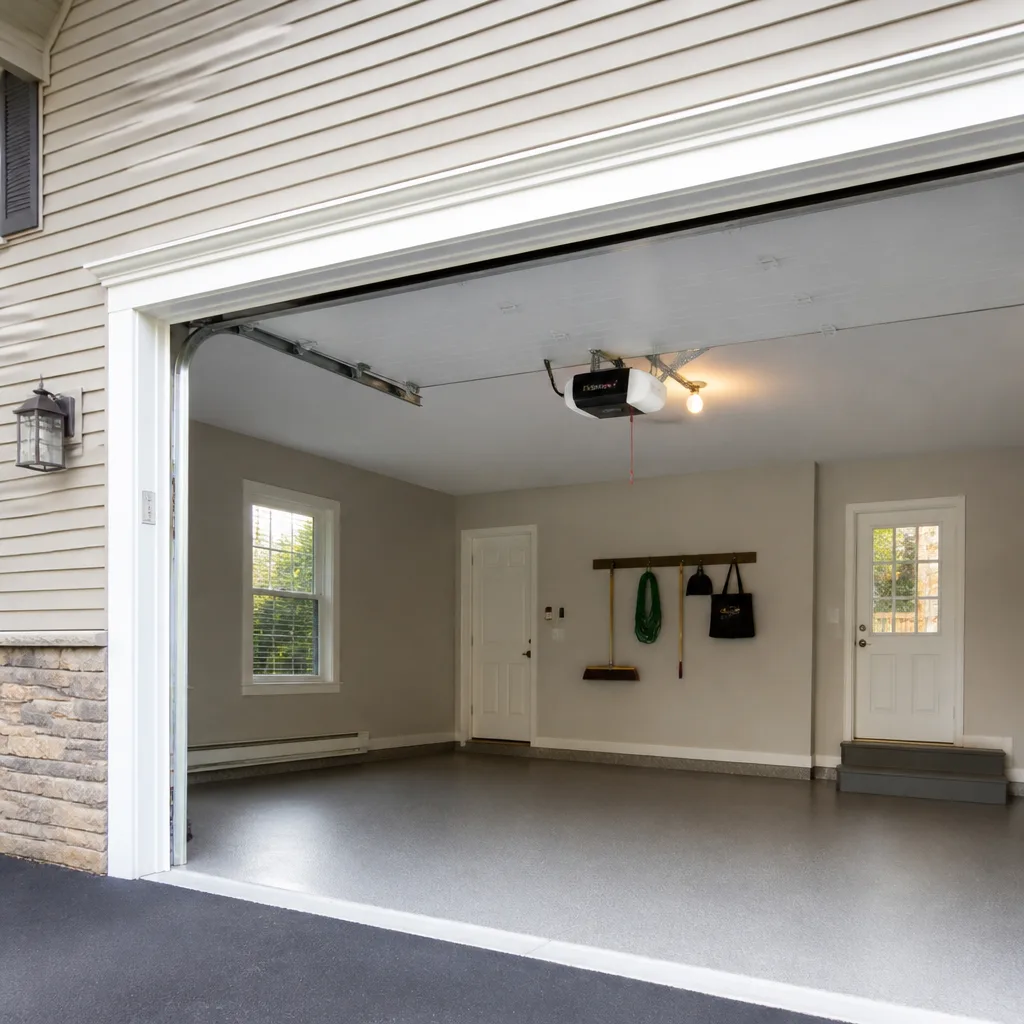 LiftMaster openers
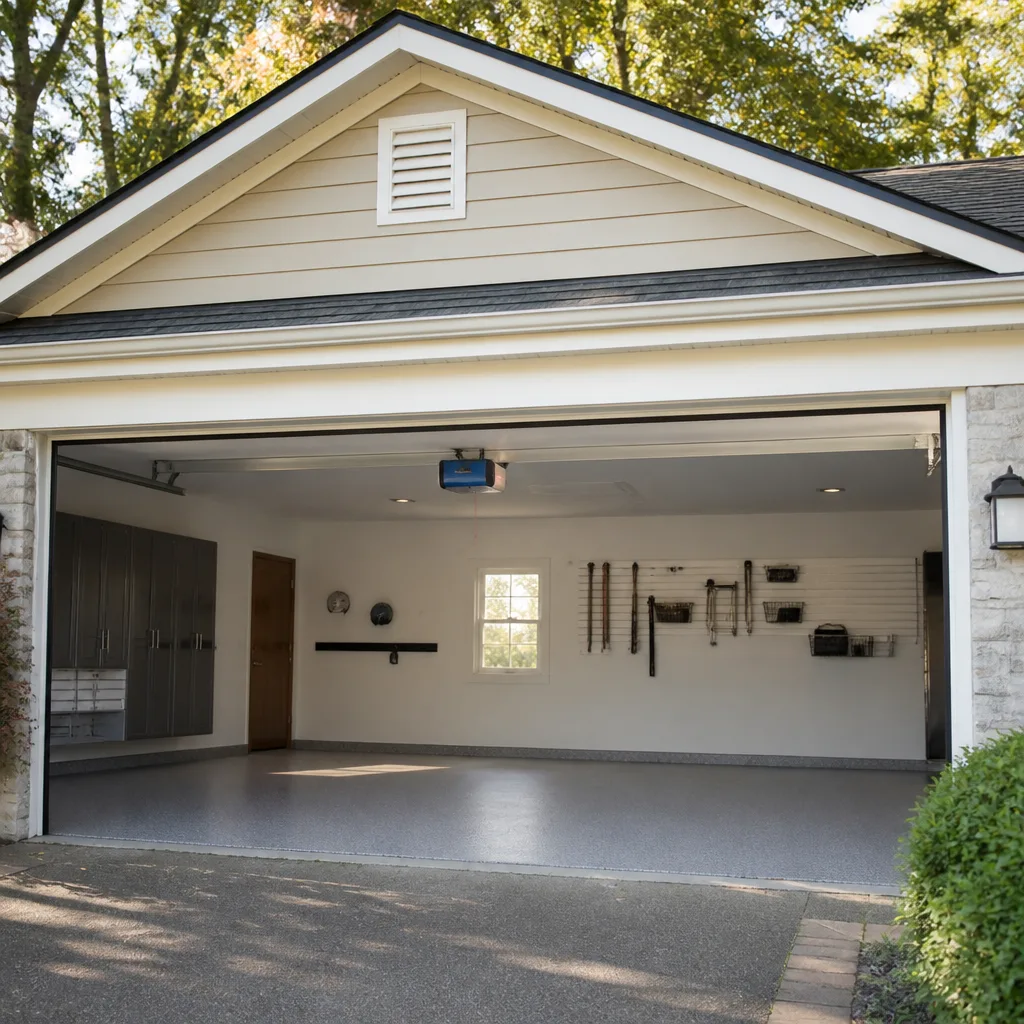 Chamberlain openers
Full 25-point door and opener safety check with every visit - springs, cables, rollers, tracks, and your LiftMaster or Chamberlain opener included
You get a price before we start. It does not change when the pro arrives.
Get your free estimateGarage Door Repair Maintenance Checklist for Towson Homeowners
Most garage door breakdowns aren’t surprise failures. They’re the result of three to six months of ignored warning signs that any homeowner could have caught in a 10-minute walkthrough. The door that won’t open on a Tuesday morning usually gave plenty of notice first: a shimmy on the way down, a rattle you stopped hearing because it became background noise, weatherstripping that started to pull away from the frame. In Towson, those warnings come with their own local flavor. Humidity off the Chesapeake corridor, freeze-thaw cycles that work on aluminum tracks, and the wear profile of doors installed during the 1990s suburban boom all push on the same hardware in specific ways. This checklist is built around those conditions, not copied from a manufacturer’s pamphlet. By the end you’ll know what to check monthly, quarterly, and yearly, what to lubricate and what to leave alone, and exactly where the DIY line sits.
Quick Answer
A good Towson garage door maintenance routine takes about 10 minutes a month, 30 minutes each quarter, and one longer annual session. Monthly, you check balance, listen for new noises, and clear the photo-eye sensors. Quarterly, you lubricate hinges, rollers, and springs with a silicone or lithium-based product rated for temperature swings, and inspect weatherstripping and bottom brackets for rust. Annually, you tighten all hardware, test the auto-reverse, and look hard at springs, cables, and track alignment. Anything involving springs, cables, or the torsion assembly stops there and goes to a trained technician.
Styles & brands we work with
- Raised-panel steel
- Carriage house
- Modern flush
- Full-view glass
- LiftMaster openers
- Chamberlain openers
Table of Contents
- Why Towson Doors Fail Differently
- The Monthly Walkthrough (10 Minutes)
- Quarterly Maintenance (30 Minutes)
- The Annual Deep Check
- The Five-Point Balance Test
- What to Lubricate and What Never To
- Stop-and-Call Triggers
- Common Mistakes to Avoid
Why Towson Doors Fail Differently
A garage door in Phoenix and a garage door in Towson age under completely different pressures, and the maintenance schedule should reflect that. Towson sits in a mid-Atlantic climate with wide annual temperature swings, humid summers, and winter road salt tracked into garages on tires and boots. Each of those conditions attacks a different part of the system.
Humidity is the slow one. Over a Maryland summer, the rubber seal along the bottom of your door goes through constant expansion and contraction. That cycle hardens the material and eventually causes it to crack or pull away from the aluminum retainer. Once the seal fails, moisture gets behind it, and you start seeing the early stages of rot on wooden door frames or rust on steel bottom sections. Weatherstripping degradation from humidity is one of the most common issues we address in Towson homes, and it’s almost always cheaper to fix in the early stage than after water has reached the frame.
Freeze-thaw is the fast one. Water gets into small gaps in aluminum tracks, expands overnight when temperatures drop, and pushes the metal slightly out of alignment. Repeat that dozens of times across a winter and the track develops a subtle bend that makes rollers drag. You’ll hear it before you see it: a grinding or scraping sound in one section of travel.
Road salt is the sneaky one. Towson gets enough winter weather that salt spray accumulates on the bottom brackets and lower hinges of doors facing the driveway. Those parts rust faster than the rest of the assembly, and a rusted bottom bracket is a weak point in a system that holds real tension.
Then there’s the age factor. A large share of Towson homes went up during the 1990s suburban expansion, which means a lot of the original doors and openers are now in their third decade. A 25- to 30-year-old door isn’t automatically a problem, but the wear profile is different: springs are closer to their cycle limits, opener gears and logic boards are aging, and the cumulative effect of small misalignments begins to show. If your door dates to that era, the checks below matter more, not less.
None of this requires a professional on every visit. It requires knowing which parts of the system your local conditions push hardest, and checking those first. For a broader look at what we handle, our Towson Garage Door Repair Pros page covers the full range.
The Monthly Walkthrough (10 Minutes)
Ten minutes once a month catches most developing problems while they’re still cheap to fix. Do this with the door closed first, then open, and keep a flashlight handy. You’re looking and listening, not disassembling anything.
- Look at the door from the street. Stand back and check that the bottom edge sits parallel to the floor. A door that’s higher on one side is a sign of cable or spring imbalance and needs a professional look.
- Listen to a full open-and-close cycle. You want a steady hum and a smooth slide. New rattles, squeaks, grinding, or a bang at either end of travel are all information.
- Test the photo-eye sensors. With the door open, wave an object in front of each sensor. The door should reverse or refuse to close. If it doesn’t, stop using the opener until it’s fixed.
- Check the weatherstripping by hand. Run your fingers along the bottom seal and the side seals. Any brittleness, cracking, or gap where daylight shows through means it’s time to plan a replacement.
- Glance at the bottom brackets and lower hinges for rust. A light haze of surface rust is normal in Towson winters. Flaking, pitting, or orange staining on the bracket itself is not.
- Look at the springs. A torsion spring across the header above the door, or extension springs along the sides. Do not touch them. Just look for visible gaps, stretching, or a visible break.
That’s it. Ten minutes. Write down anything that changed since last month, because comparing notes is how you spot slow drift. For opener-specific quirks on brands like Chamberlain or Genie, our guide to garage door opener repair goes deeper into what each system does when it’s failing.
What the Five Monthly Checks Catch
- Sensor drift: photo-eyes go out of alignment from vibration, and a misaligned sensor is the number-one cause of a door that “won’t close for no reason.”
- Weatherstripping failure: caught early, this is a seal replacement. Caught late, it’s a frame repair.
- Rust on brackets: early rust cleans up. Advanced rust on a tension-bearing bracket is a replacement job.
- Noise changes: new sounds almost always trace to a specific component before that component fails completely.
- Balance drift: a door that’s starting to lean is telling you the springs are weakening.
Quarterly Maintenance (30 Minutes)
Four times a year, set aside half an hour and go a layer deeper. This is where you clean and lubricate, where you can slow the wear that Towson’s humidity accelerates.
Clean and Lubricate the Moving Parts
Wipe down the hinges, rollers, and track with a dry cloth first. Built-up grit turns lubricant into grinding paste, which is worse than no lubricant at all. Then apply a small amount of a silicone-based or white-lithium lubricant rated for wide temperature ranges to each hinge pivot point and each roller bearing. A little goes a long way. Excess lubricant attracts dust and holds it against the metal.
The temperature rating matters here. A product that turns gummy below freezing will make your door drag in January, even though it worked fine in October. Look for lubricants that stay fluid across the full mid-Atlantic range, roughly from single digits to the upper nineties. If you’re not sure, a light silicone spray is the safe default for most homeowners.
Inspect the Weatherstripping and Bottom Seal
Pull gently on the bottom seal at several points along its length. It should flex and spring back. If it feels stiff, brittle, or has visible cracks, schedule a replacement before the fall. Also check the side seals and the top seal, and look at the aluminum retainer that holds the bottom seal in place. Maryland humidity cycles can cause that retainer to work loose over years.
Check the Track Alignment
Stand to the side and sight down each vertical track. It should look like a straight line. Any kink, bow, or section that pulls away from the door frame is worth having looked at. Don’t try to bend aluminum track back with a hammer; the tolerances are tighter than they look, and a misaligned track accelerates roller wear across the whole door.
Test the Auto-Reverse and Force Settings
Lay a piece of 2×4 flat on the ground under the closed door, then run the door down. It should reverse the moment it contacts the board. If it doesn’t, the force setting or the opener’s safety system needs attention. Repeat this test every quarter, because it’s the single most important safety function on the door.
The Annual Deep Check
Once a year, spend an hour on the door and give it a full audit. Late fall is the best time in Towson: you get ahead of winter freeze-thaw damage instead of repairing it in spring. This is also the check where you decide whether anything has crossed into professional territory.
- Tighten every accessible bolt and screw on hinges, brackets, and the opener mounting hardware. Vibration loosens these over months. Snug them; don’t crank them to the point of stripping.
- Examine each roller. Steel rollers wear and flat-spot. Nylon rollers crack. Spin each one by hand and check for wobble or rough movement. Worn rollers are a common source of noise and track wear.
- Inspect cables for fraying. Look along the length of each cable for broken strands, kinks, or sections that look stretched. Do not touch the cables or loosen anything to inspect them. Visual inspection only.
- Check spring condition carefully. Torsion springs should show no visible gaps, no stretched sections, and no rust spots where the wire has thinned. Extension springs should be intact along their full length, and any door with extension springs should have safety containment cables running through them. If you don’t see those cables, that’s a call.
- Test the balance (full procedure below).
- Look at the opener hardware. The rail should be tight, the chain or belt should have correct tension, and the down-limit should stop the door correctly. On a Chamberlain or Genie unit, a flashing error code or a door that stops short points to a limit switch or logic issue.
- Inspect the door panels and frame for cracks, rot, or separation. Wood doors in particular need this check after Maryland’s humid summers.
- Look at the torsion bar and end plates if your door has them. The bar should be straight and the plates should be secured tightly to the wall.
If any of these checks raise a question, don’t wait for something to break. The whole point is to catch issues while they’re still small. For a deeper dive into what spring problems look like before failure, see our page on garage door spring repair.
The Five-Point Balance Test
The balance test is the single most useful diagnostic a homeowner can run, because it reveals spring wear before the spring breaks. A door that’s still balanced is still safe. A door that has to be forced, or that drops on its own, is telling you the springs are losing tension.
How to run it: Disconnect the opener first by pulling the manual release handle (usually the red cord hanging from the trolley). Then move the door by hand, slowly, checking each of the five positions below. Have someone stand clear. Keep your hands away from hinges and the spring assembly.
- Closed position: Does the door sit flush and even with the floor? Any lean suggests cable or spring imbalance.
- Quarter open: Release the door and let go. It should hold roughly in place, or drift slightly down. It should not drop fast or fall to the floor.
- Half open: The most diagnostic position. A balanced door stays put, or moves slightly. A door that has to be propped, or that falls, means the springs have lost significant tension.
- Three-quarters open: Lift to this point with moderate effort. If you’re straining, the door is heavier than the springs can support.
- Fully open: Release and let go. The door should stay fully open without drifting down more than a few inches.
Any failure at positions two through five is a spring or cable issue, and spring and cable work is a professional job. Torsion springs are under extreme tension even when the door is down. They can and do cause serious injury when handled without the right tools and training. We’ll say it plainly: don’t attempt spring adjustment yourself. That’s the line, and it’s the right one. Reconnect the opener when you’re done with the test.
What to Lubricate and What Never To
Lubrication is where well-intentioned homeowners cause the most damage, because the instinct to “spray everything that moves” is wrong on a garage door.
What to Lubricate
- Hinge pivot points – one small drop or spray at each joint, twice a year, more often if the door is heavily used.
- Roller bearings – a light spray where the roller meets the stem. Wipe any excess afterward.
- Opener chain or screw drive – if the manufacturer specifies lubrication. Genie screw drives, for example, typically take a specific lubricant called for in the manual. Check the manual before applying anything.
- Spring coils – a very light coating can reduce squeak on torsion springs, but only apply to the exterior of the coil with the door closed and without touching the assembly. If the spring is already showing wear, skip this and have it looked at.
What Never to Lubricate
- Bearings on nylon rollers – most are designed to run dry, and lubricant attracts grit.
- The track itself – grease on the track collects dirt and dust and turns into an abrasive paste that wears rollers fast.
- Cables and cable drums – these are under high tension and should not be touched by anyone without training and proper tools.
- Photo-eye lenses – wipe with a damp cloth if dusty, but never apply anything oily.
The product itself matters as much as the placement. Silicone spray is the safest all-around choice for mid-Atlantic temperature swings. White lithium grease works well on hinge pivots. WD-40 as an everyday multi-purpose spray is not the right choice here: it’s a solvent, not a long-term lubricant, and it will dry out and attract dust. Use the right product and less of it.
Stop-and-Call Triggers
A checklist is only useful if it has a clear stopping point. Here are the conditions that turn a maintenance task into a professional call. Stop what you’re doing and get a trained technician out.
- Any visible break in a spring. A gap in the torsion spring or a broken extension spring means the door is unsupported and unsafe to operate.
- A door that falls or drops on its own. This is spring or cable failure. Don’t run the opener.
- A loud bang from the garage. That’s typically a spring snapping. The door may look intact while being completely unsupported.
- A cable that’s visibly frayed, kinked, or off its drum. Cable failure can send the door crashing, and cable work is not a DIY job.
- Any question about the auto-reverse safety feature. If it doesn’t work, the door shouldn’t be used until it’s fixed.
- A door that won’t open or close at all. This is where emergency service comes in. Call (844) 931-3676 and we’ll get a technician out to diagnose it.
- Rust on tension-bearing hardware that has progressed past surface haze. A bottom bracket that’s pitted or weakened in a Towson winter is a replacement item, not a cleaning item.
- Any time you’re unsure. Trust that. The garage door is a heavy, spring-loaded system and the risk of getting it wrong isn’t worth the money you might save.
For repair work, our team is set up to diagnose the same day in most cases, and we’re familiar with the full range of brands including LiftMaster, Chamberlain, Genie, Clopay, Amarr, Wayne Dalton, Craftsman, and Raynor. When you need garage door repair, a written price is agreed before any work starts.
Common Mistakes to Avoid
- Lubricating the track. It feels logical, it’s wrong. Grease on the track collects grit and turns into an abrasive paste that wears rollers and can cause the door to bind. Keep the track clean and dry, and lubricate the rollers and hinges instead.
- Ignoring weatherstripping on the assumption it’s cosmetic. Torn weatherstripping lets in humid air and, in Towson winters, road moisture that works into the door frame. Replacing a bottom seal is inexpensive; replacing rotted framing is not.
- Using WD-40 as a lubricant. It’s a solvent and a light water displacer. It will not provide lasting lubrication at a hinge pivot and it will attract dust. Use silicone spray or white lithium grease.
- Adjusting the force setting to fix a door that binds. Turning up the opener force to overcome door drag masks the real problem, which is usually worn rollers, a misaligned track, or weakening springs. It also stresses the opener. Diagnose the drag, don’t paper over it.
- Bending a track back with a hammer. Aluminum track tolerances are tighter than they look, and a “fixed” bend usually introduces a new catch point. If the track is out of line enough that the door binds, call a technician.
- Never testing the auto-reverse. It’s the most important safety feature on the door, and it’s easy to skip because “it never worked before.” Test it quarterly. If it fails, stop using the door.
- Treating a 1990s door like a new one. If your door dates to Towson’s suburban building boom, the springs may be near their cycle limits and the opener may be past its expected life. Schedule a professional inspection at least once, even if nothing seems wrong.
See the difference
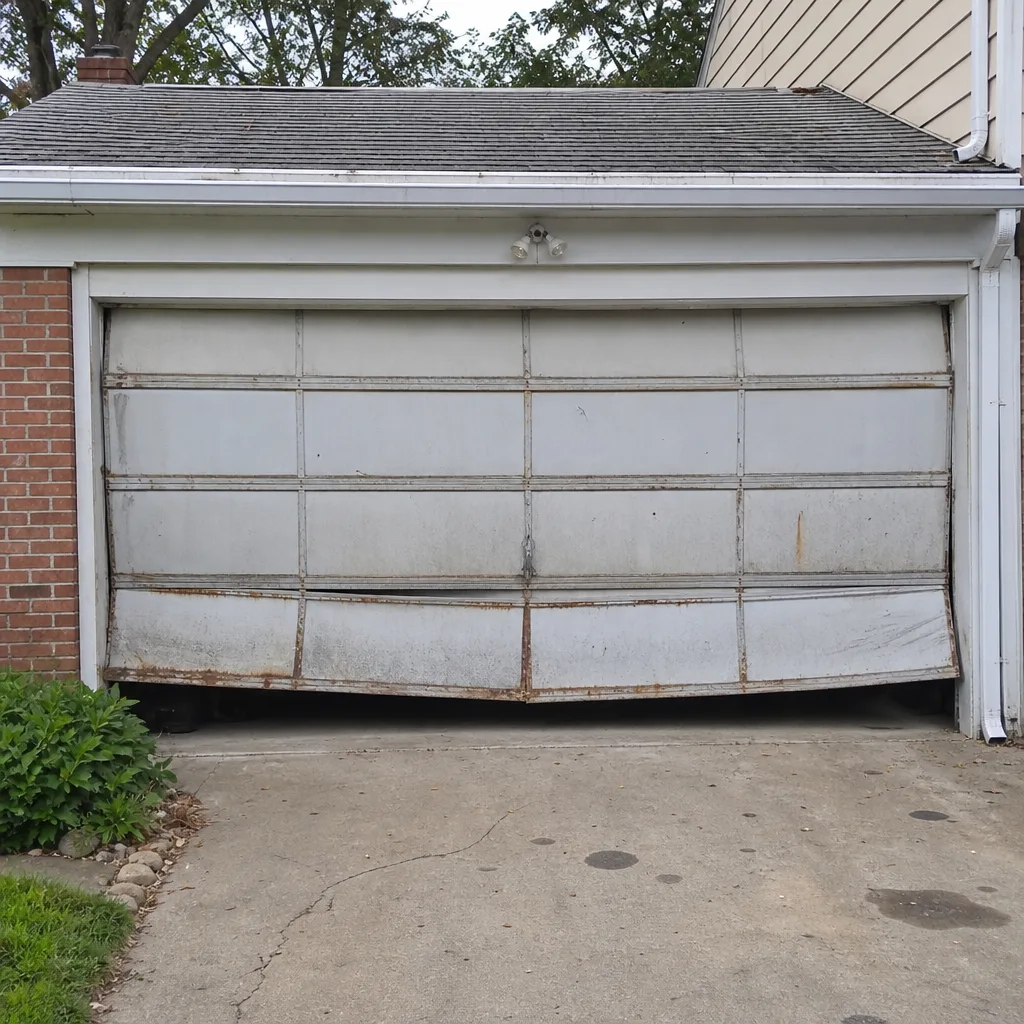 Before
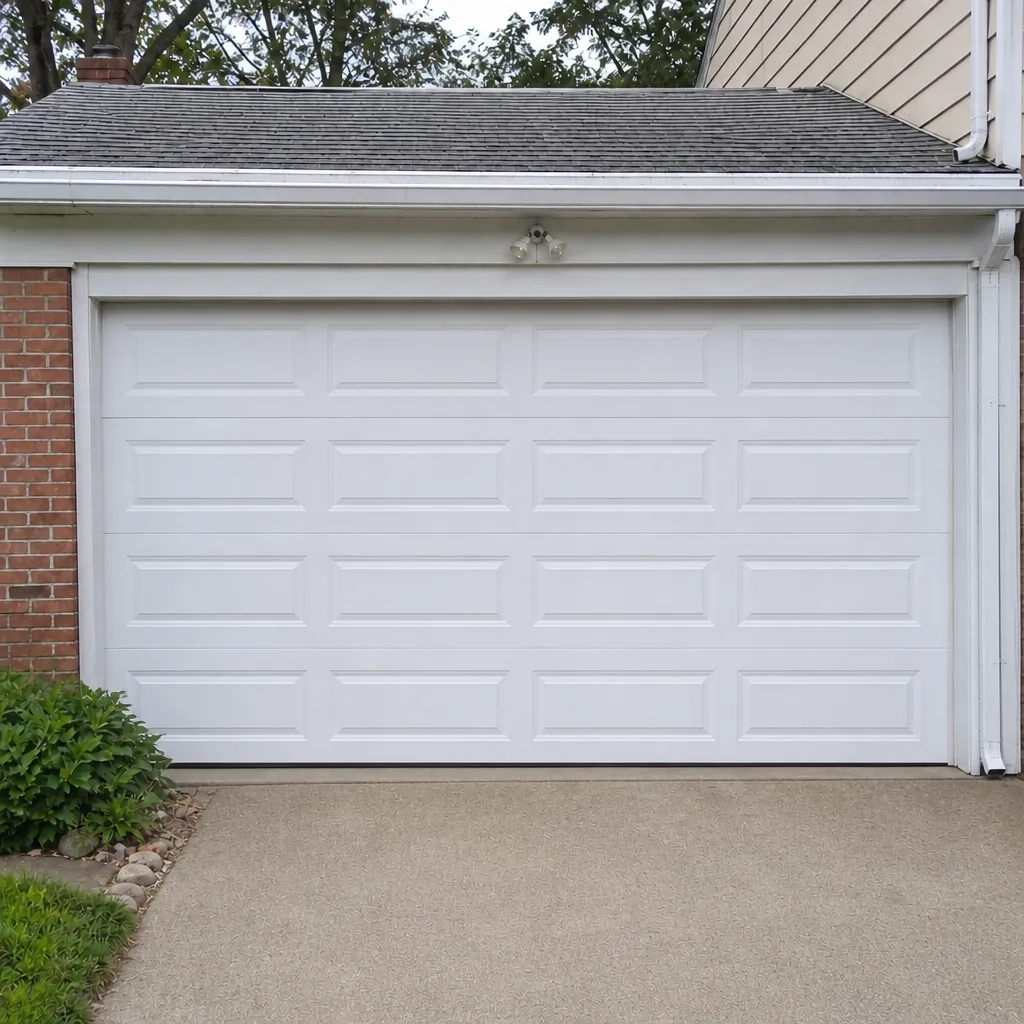 After
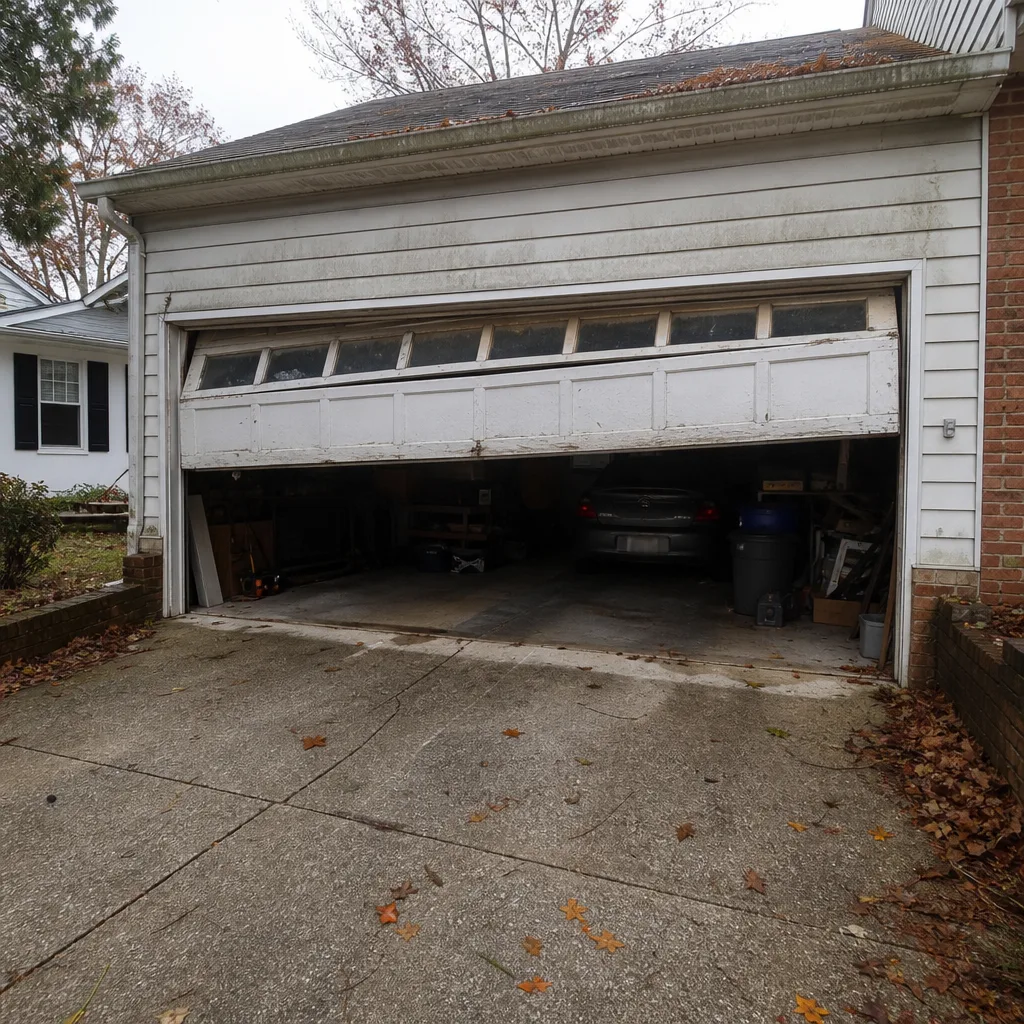 Before
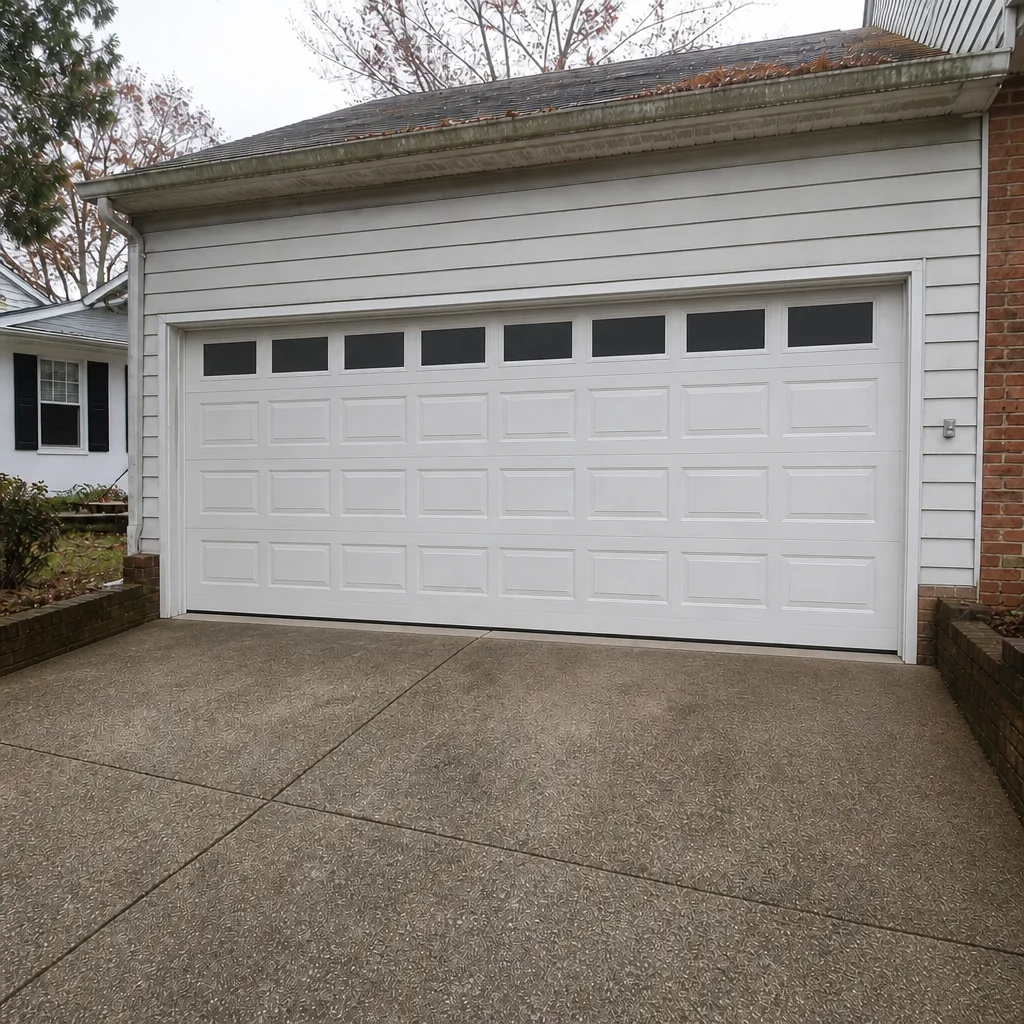 After
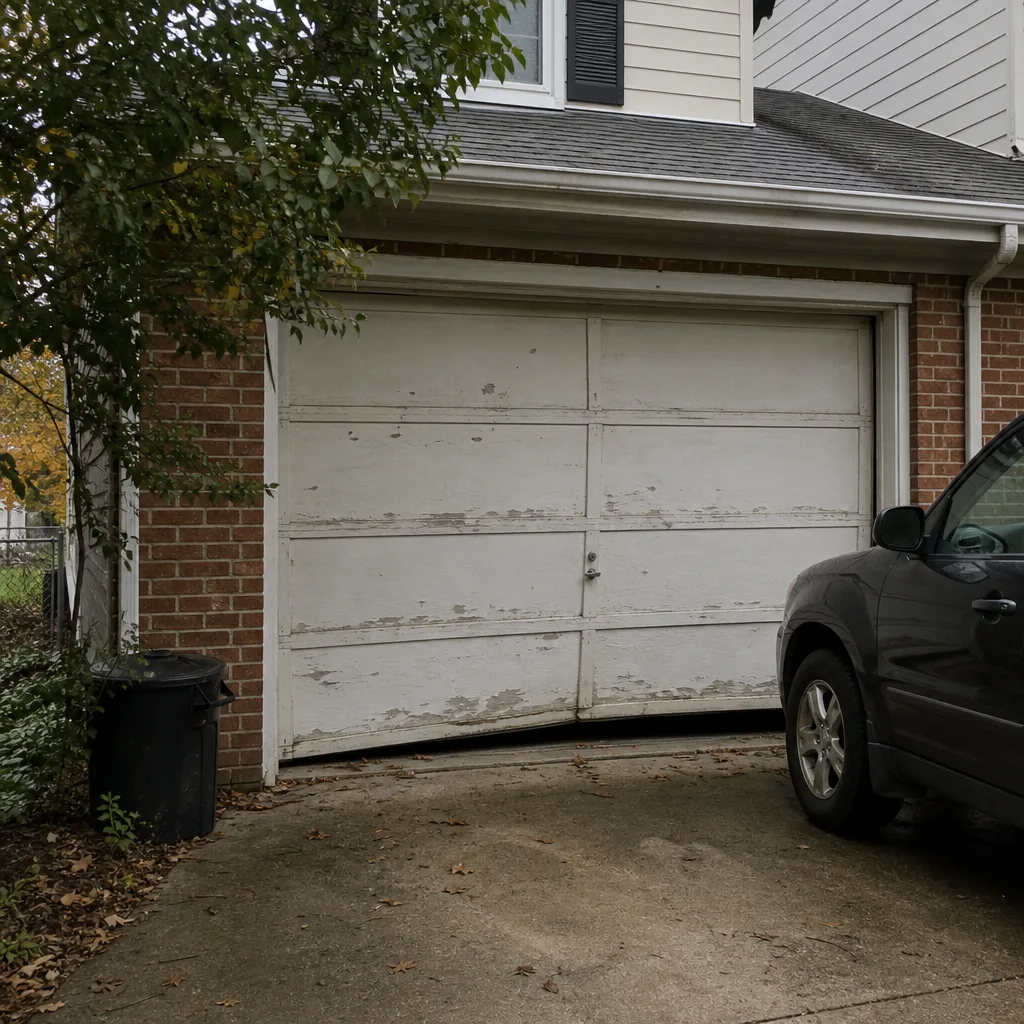 Before
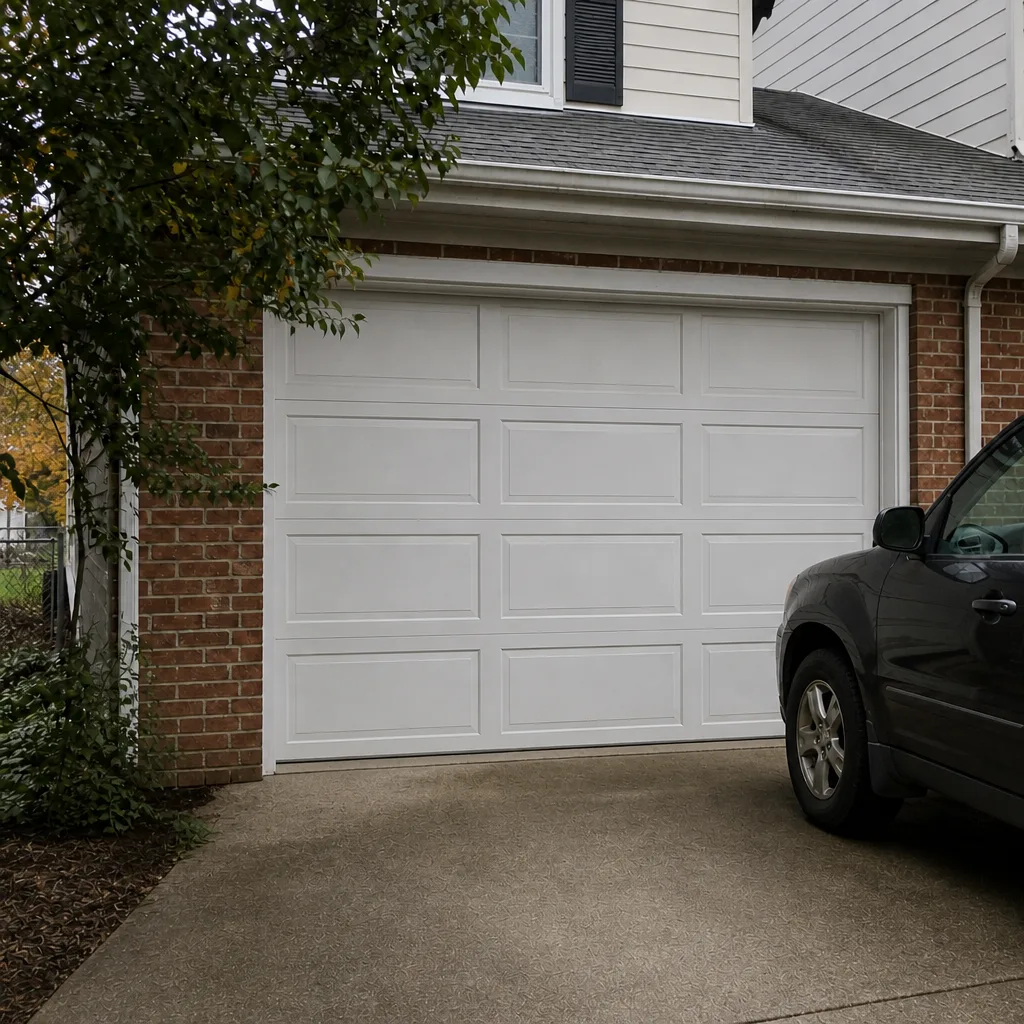 After
When to Call a Professional
Some jobs belong on your Saturday checklist: lubricating hinges, clearing the photo-eye lenses, replacing weatherstripping, tightening a loose bolt. Others don’t. Springs, cables, torsion assemblies, track realignment, and anything involving the opener’s internal electronics should go to a trained technician. We draw the line there for a reason: torsion springs hold enough tension to injure an untrained person badly, and cable work can drop a door without warning. If your door makes a loud bang, won’t balance, won’t reverse on contact, or won’t open at all, that’s a call, not a project. Towson Garage Door Repair Pros offers free estimates in Towson. Call (844) 931-3676 and we’ll get eyes on the door, confirm what’s actually wrong, and give you a price in writing before any work begins.
Frequently Asked Questions
Once a month for a quick visual and audio check, once a quarter for lubrication and seal inspection, and once a year for a full hardware and safety audit. That schedule fits Towson’s climate specifically, because the humid summers and freeze-thaw winters put more stress on weatherstripping and tracks than a drier climate would. If your door is heavily used, up the quarterly checks to every other month. Call (844) 931-3676 for an exact quote on a professional inspection; estimates are free.
DIY maintenance costs you a can of silicone spray and an hour a year. A professional inspection typically runs in the range of $75 to $150, and service calls for specific repairs depend on what’s found. We give you a written price before any work begins, so you know exactly what you’re approving. On a repair call, the standard pricing we quote is based on the actual component and labor involved, not a flat rate. Call (844) 931-3676 for an exact quote; estimates are free.
A door that’s hard to lift is telling you the springs have lost tension and are no longer supporting the door’s weight. That’s a spring problem, and it’s the failure stage before a snap. Stop using the door. A spring under failing tension can break and the door can come down without warning. Call (844) 931-3676 and we’ll get a technician out to check the spring assembly; estimates are free and the visit is scheduled quickly.
You can apply a very light spray to the exterior of a torsion spring coil with the door closed, but you should never touch or adjust the spring assembly itself. The tension on a torsion spring is extreme even when the door is down. If a spring is squeaking, binding, or showing any wear, that’s a call, not a lubrication job. Call (844) 931-3676 for a free estimate on a spring inspection.
Maryland humidity cycles are the main cause. The rubber seal expands and contracts through every summer and winter, which hardens the material and causes it to crack or pull away from the retainer. Once it starts failing, it fails faster, because humid air gets in behind the seal. Replacing it before fall is the smart move in Towson. Call (844) 931-3676 for an exact quote on weatherstripping replacement; estimates are free.
No. Our written quote is the price. If the technician finds something the initial diagnosis missed, we don’t start that work until you’ve seen a revised quote and approved it. You will never get a surprise invoice from us. The number you approve is the number you pay. Call (844) 931-3676 for a free estimate; a written price is agreed before any work starts.
The local pros we connect you with are licensed and insured as their state requires. We work with technicians who have up to 13 years of experience across the major brands, including LiftMaster, Chamberlain, Genie, Clopay, Amarr, Wayne Dalton, Craftsman, and Raynor. Call (844) 931-3676 for an exact quote; estimates are free.
The Bottom Line
Garage door maintenance in Towson is not a mystery, and it’s not a big project. Ten minutes a month and thirty minutes a quarter, plus one longer session in late fall, cover almost everything. The specific conditions to watch are the ones your local climate creates: humidity that ages weatherstripping, freeze-thaw that distorts aluminum track, road salt that rusts bottom brackets, and the wear profile of doors built in the 1990s boom. Run the five-point balance test quarterly, lubricate the right parts with the right products, and stop the moment the check reaches the springs, cables, or torsion assembly. That’s where the checklist ends and a trained technician begins. When your maintenance turns up something serious, or your door has stopped moving and you need a fix today, call (844) 931-3676. Estimates are free, the price is agreed before any work starts, and our technicians are familiar with the full range of brands you’re likely to have.
Written by the team at Towson Garage Door Repair Pros.